THE DRAMA TRIANGLE, 2025
Luftgallerie_3 Hacken, AG KunstZoll
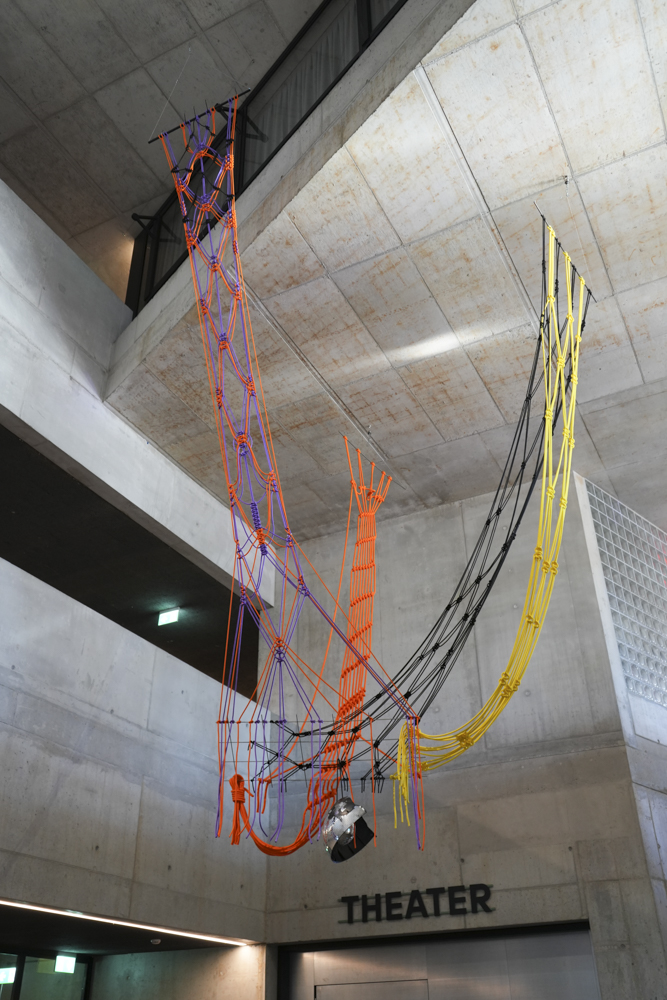
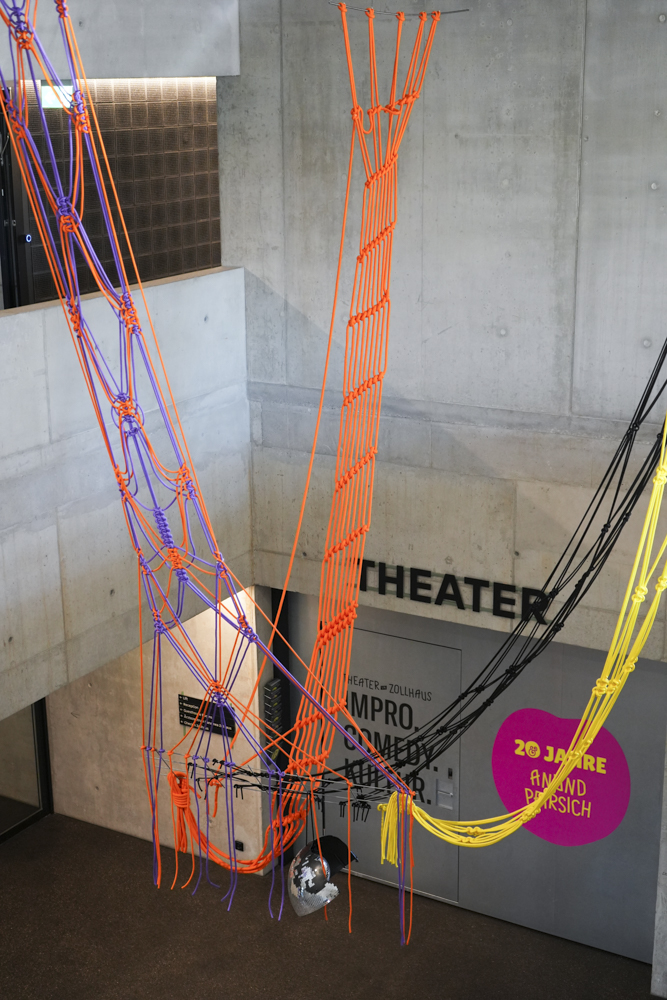
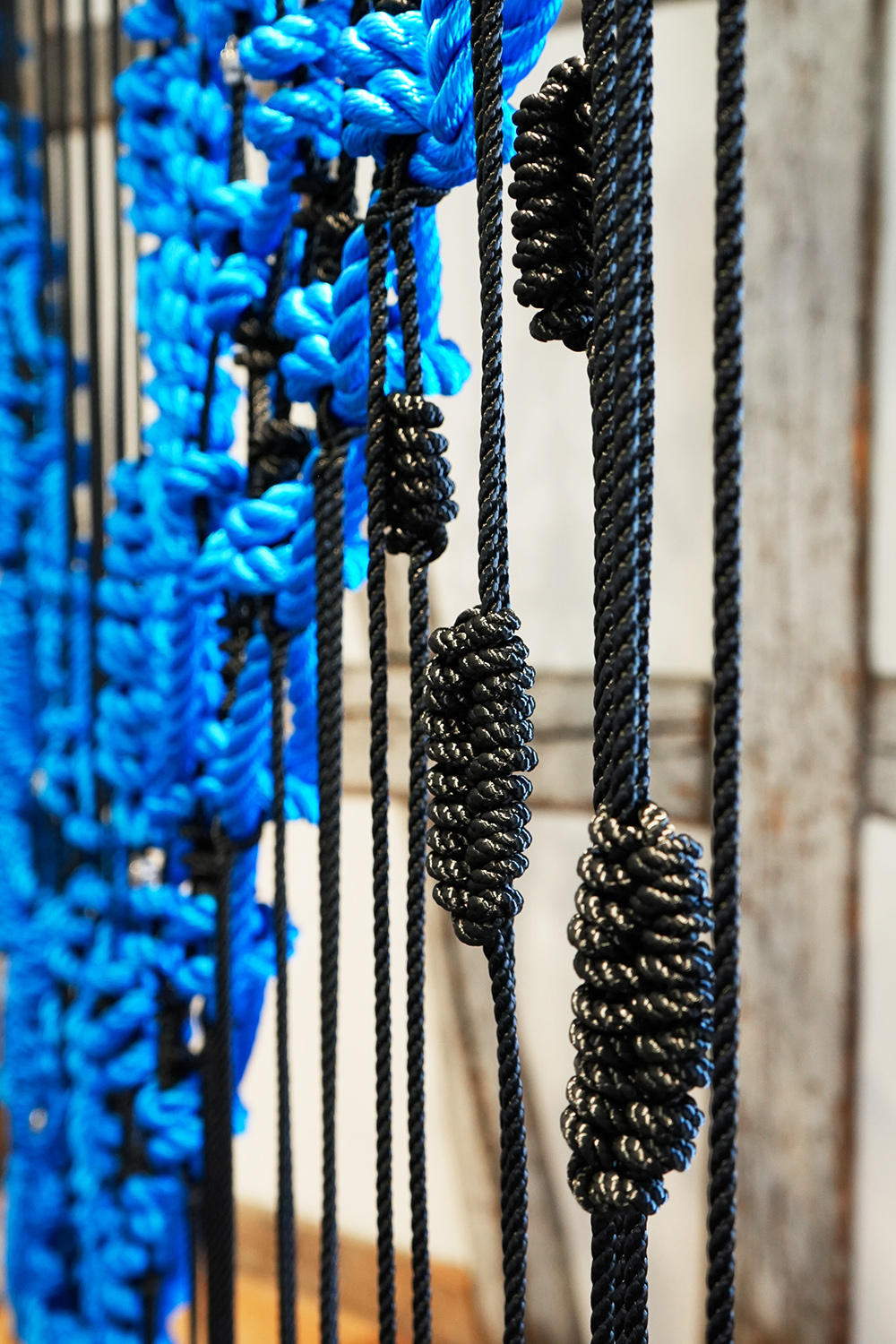
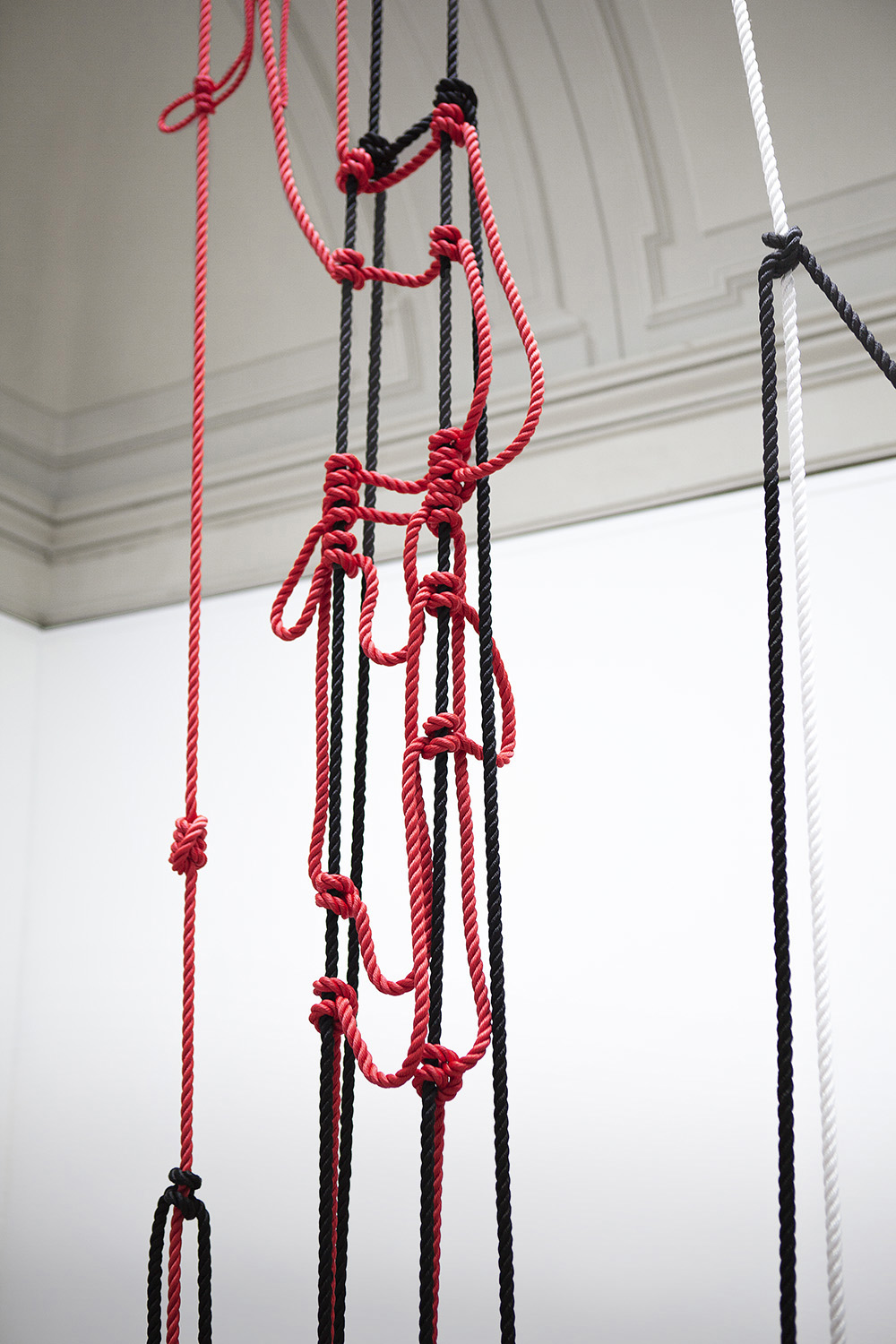
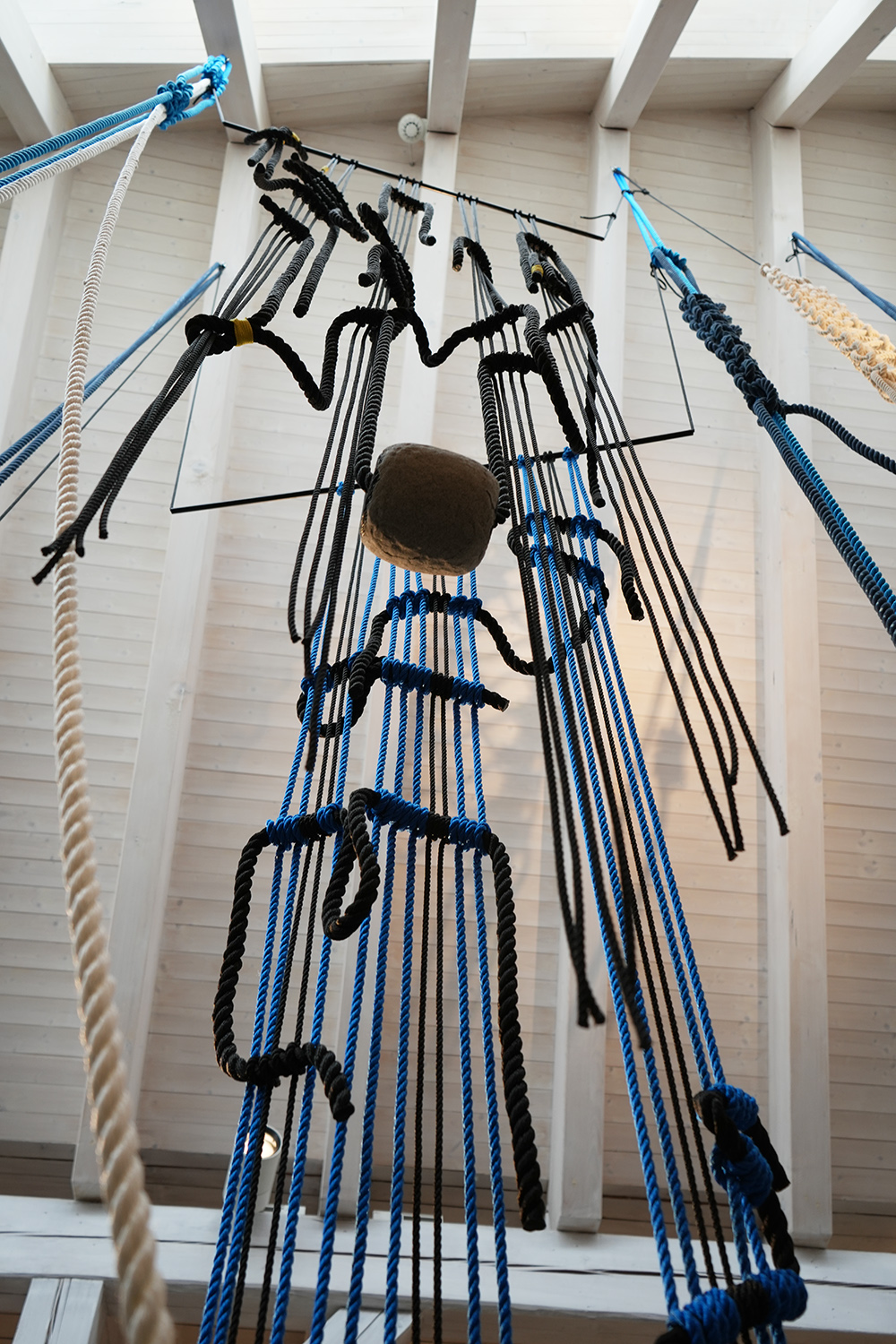
Im Ensemble ‚The Drama Triangle‘ für das Forum im Zollhaus Zürich konzentriert sich die Künstlerin auf das Konzept des Drama-Dreiecks nach Stephen Karpman aus der Transaktionsanalyse, das in die gesellschaftliche Bewegung von 1968 zurückreicht. Es ist ein psychologisches und soziales Modell, das beschreibt, wie abwechselnd Rollen in zwischenmenschlichen Beziehungen eingenommen werden können und welche Dynamiken dabei entstehen.
Für dieses Muster gibt es analytische, suchttheoretische, verhaltenstheoretische, systemische und entwicklungspsychologische Erklärungsansätze. So ist das Drama-Dreieck sowohl auf der persönlichen Ebene relevant wie auch in kollektiven Zusammenhängen.
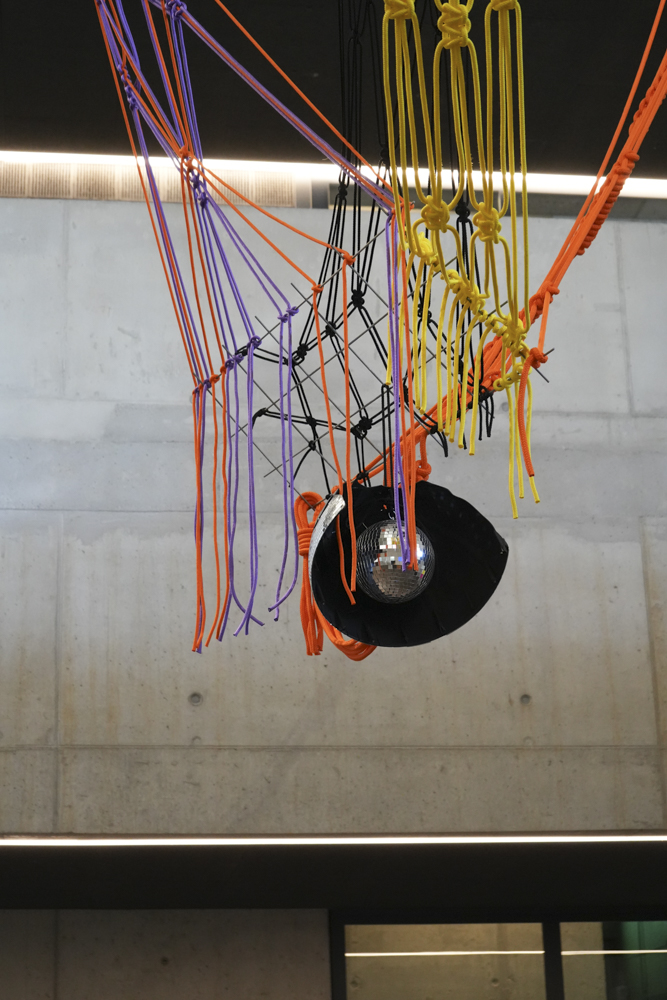
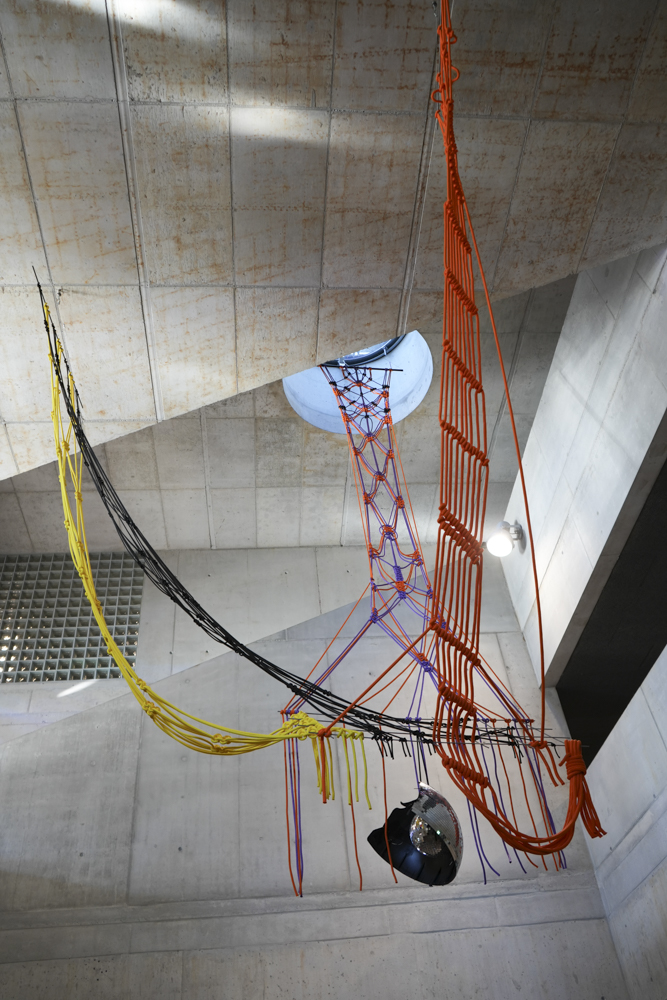
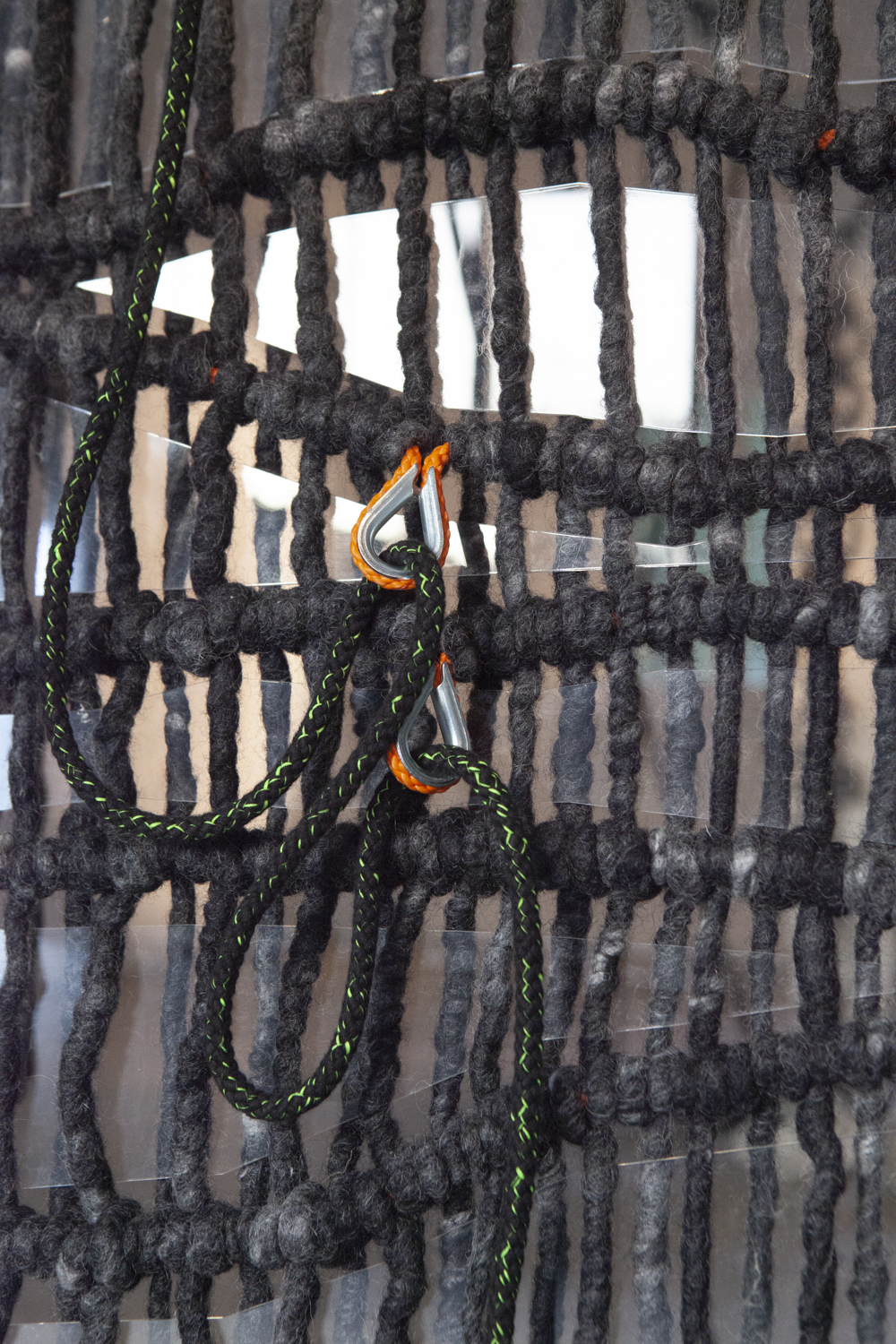
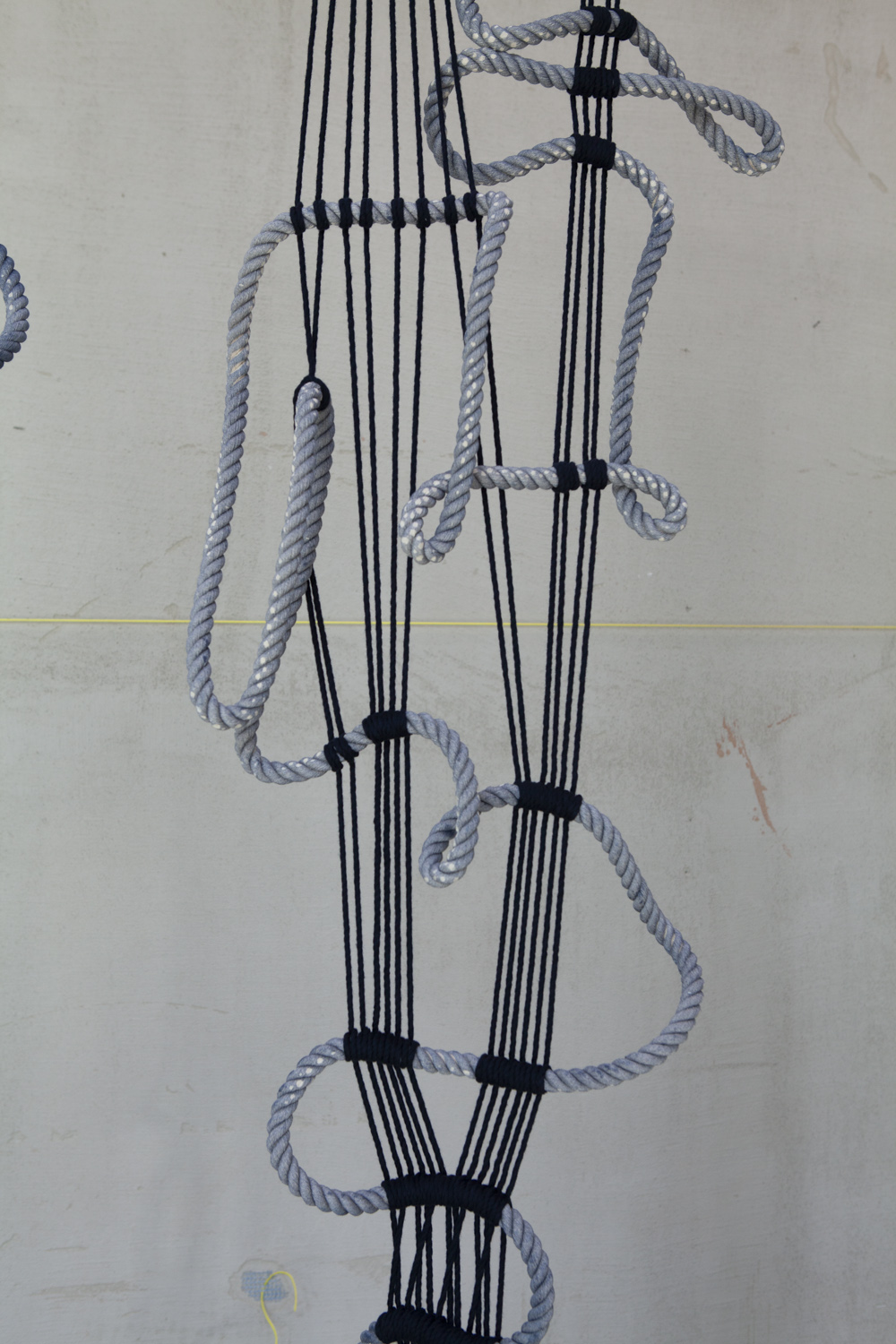
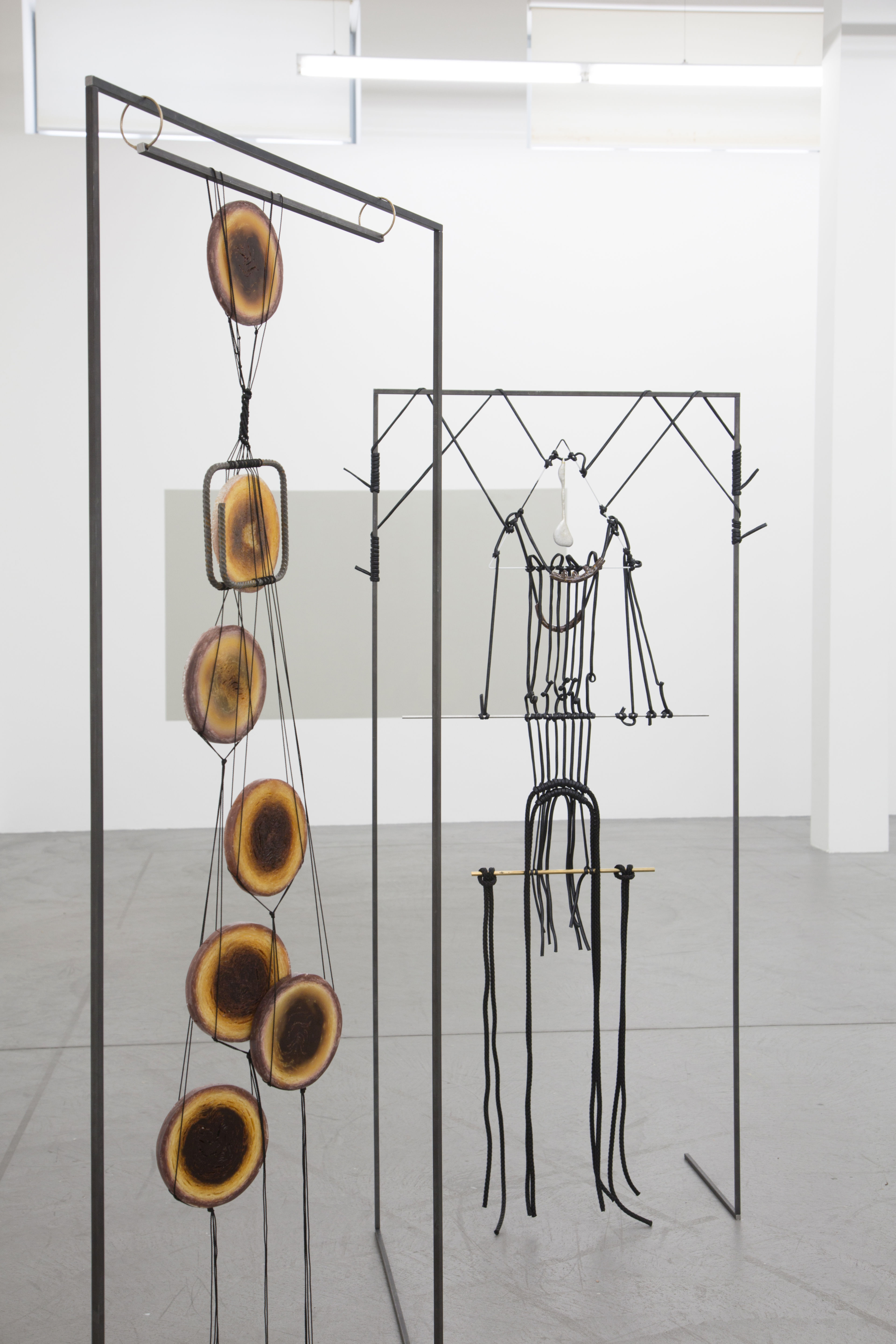
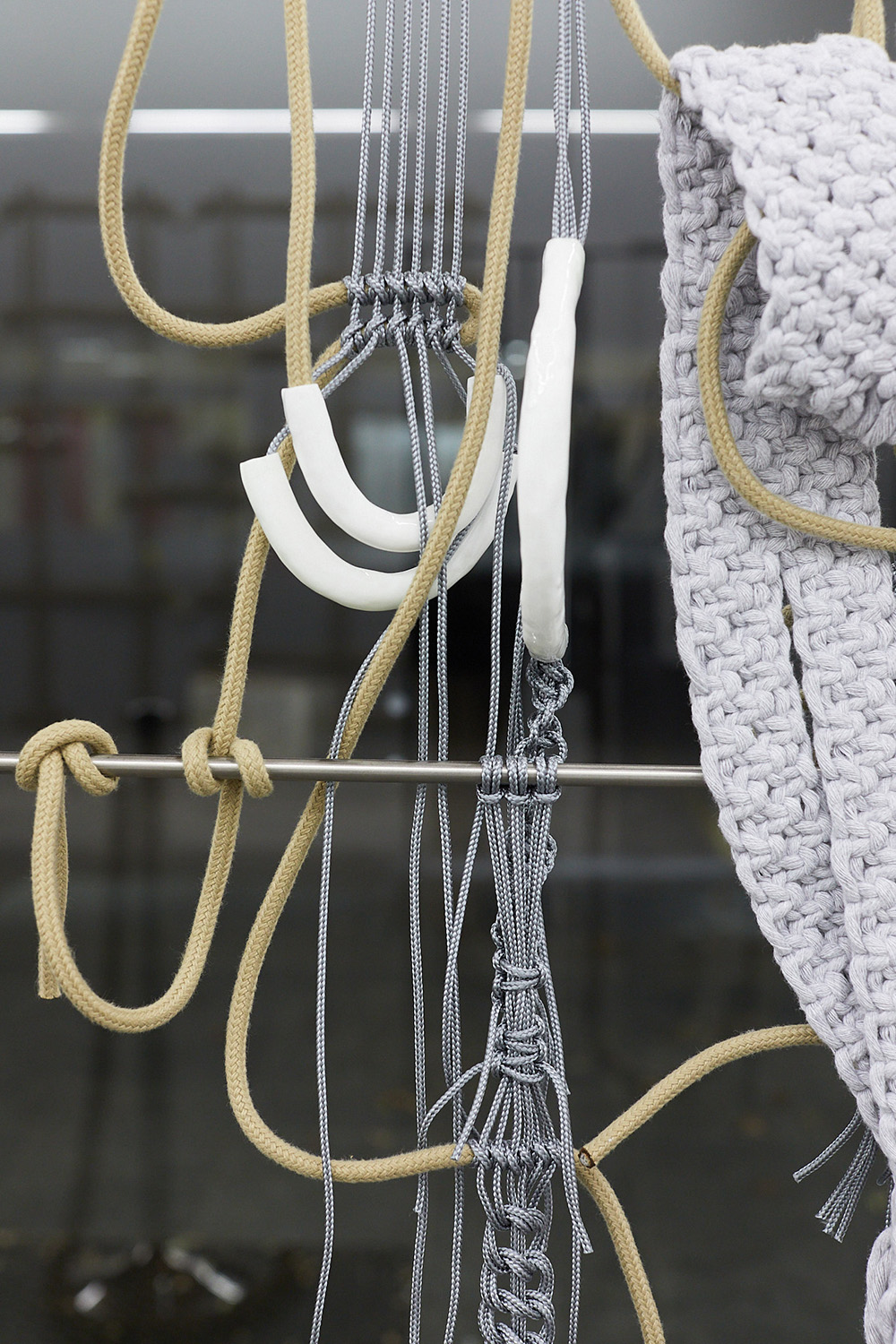
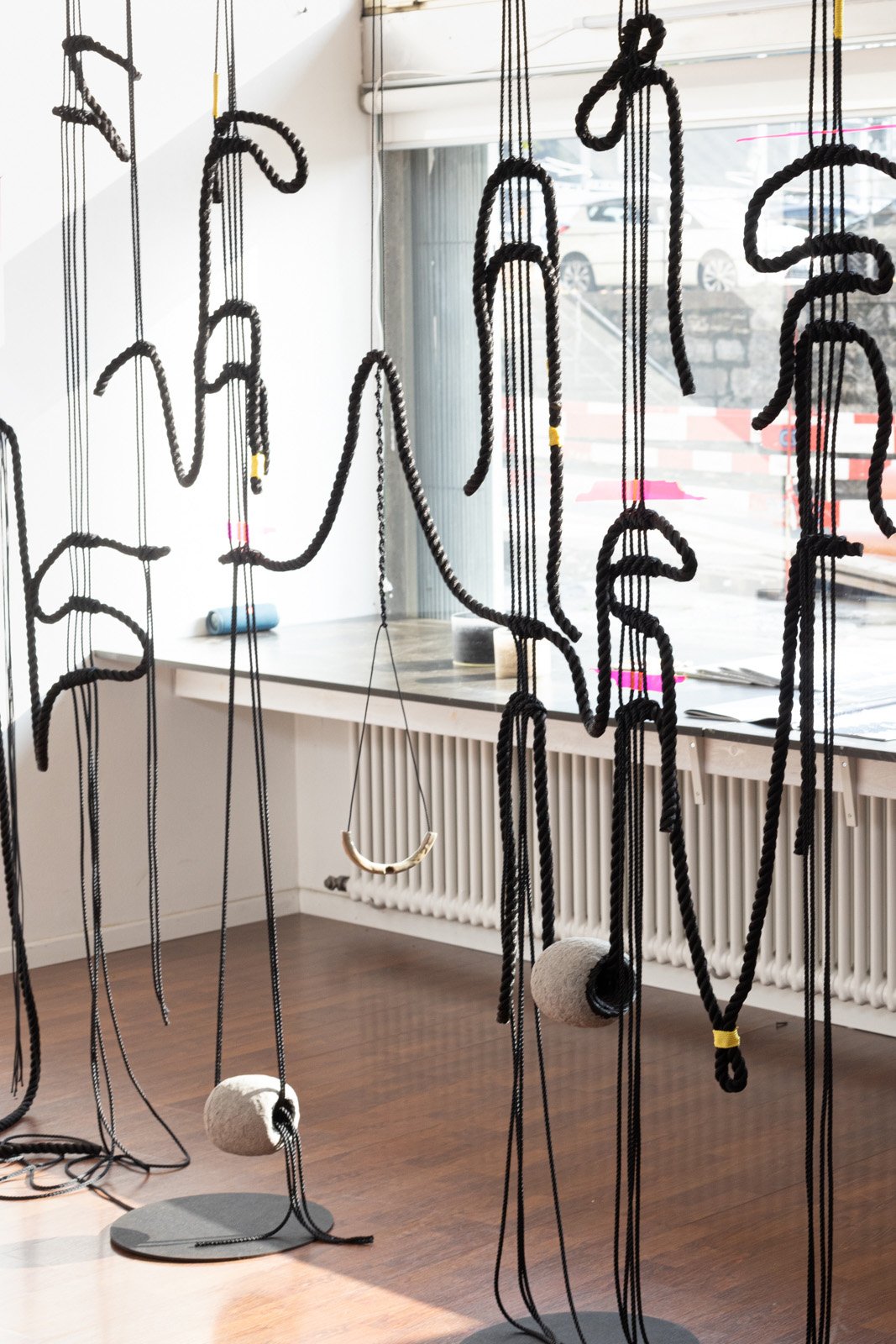
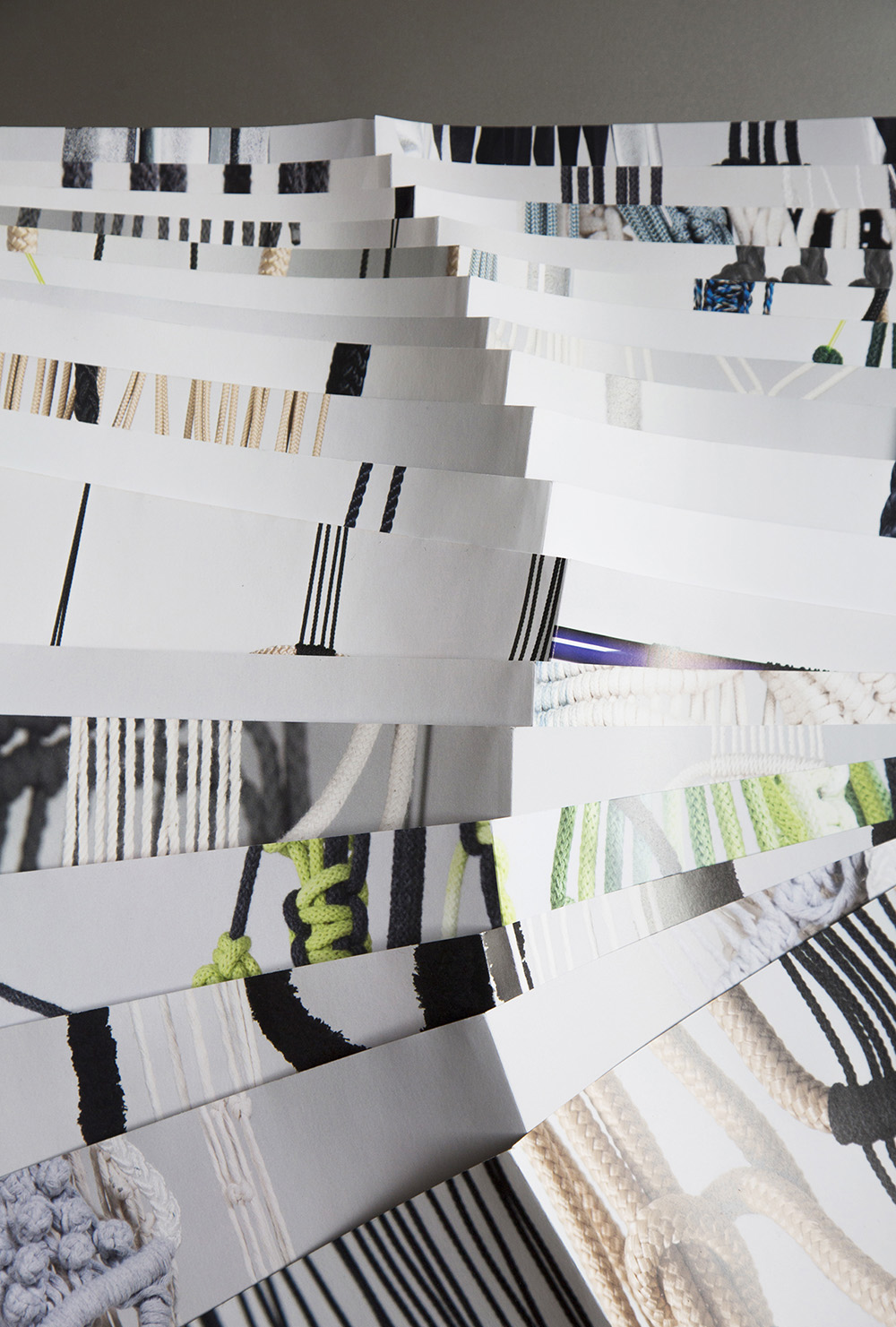
Das ‚Drama Triangle‘ zeigt eine Dreiteiligkeit, die sich im Raum entfaltet. Komplexität und Verschränkung zeigen sich in Knoten, Mustern und in der Ausdehnung im Raum. Die Architektur der Halle spielt dabei eine wichtige Rolle – wir können sie als Vorgabe und Rahmenbedingung lesen, aber auch als offener Raum in der Genossenschaft für zahlreiche soziale Interaktionen und als Begegnungsort. Die Künstlerin Lisa Biedlingmaier nimmt die drei Hacken des Forums zum Anlass, mit ihren Seilen das Dreieck als dynamisches Gebilde in die Luft zu schlingen.
Sibylle Omlin
at Zollhaus Forum, Zurich
12.12.2025 – 26.03.2026
Zollstrasse 121, 8005 Zurich
Fotos:
Lisa Biedlingmaier
Linda Jensen (Last Tango):
Lisa Biedlingmaier has long been concerned with bodily, psychic, and political subjects, be it the sub/conscious, belonging, love, death, and spirituality.Linda Jensen (Last Tango):
Lisa Biedlingmaier has long been concerned with bodily, psychic, and political subjects, be it the sub/conscious, belonging, love, death, and spirituality.
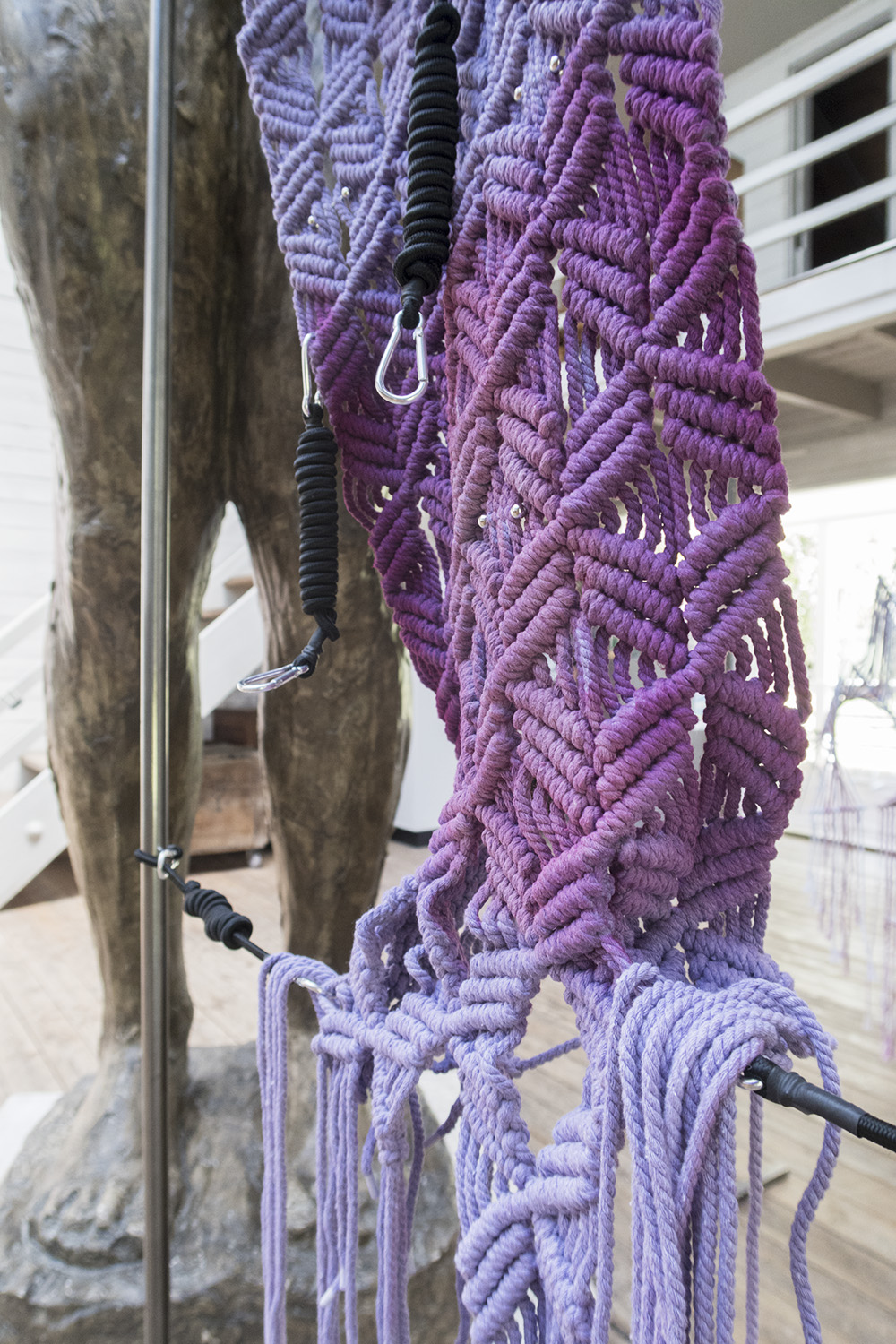
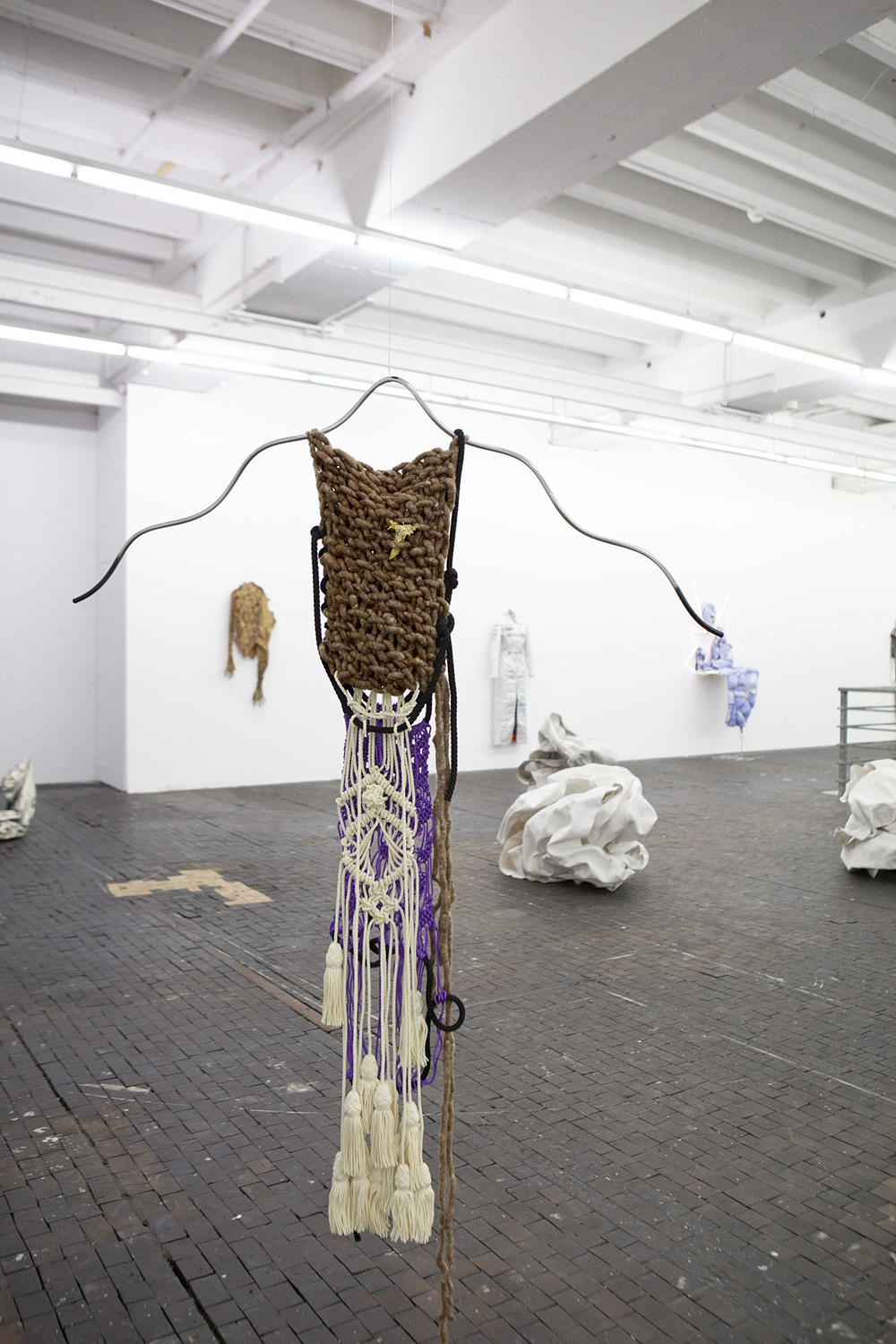
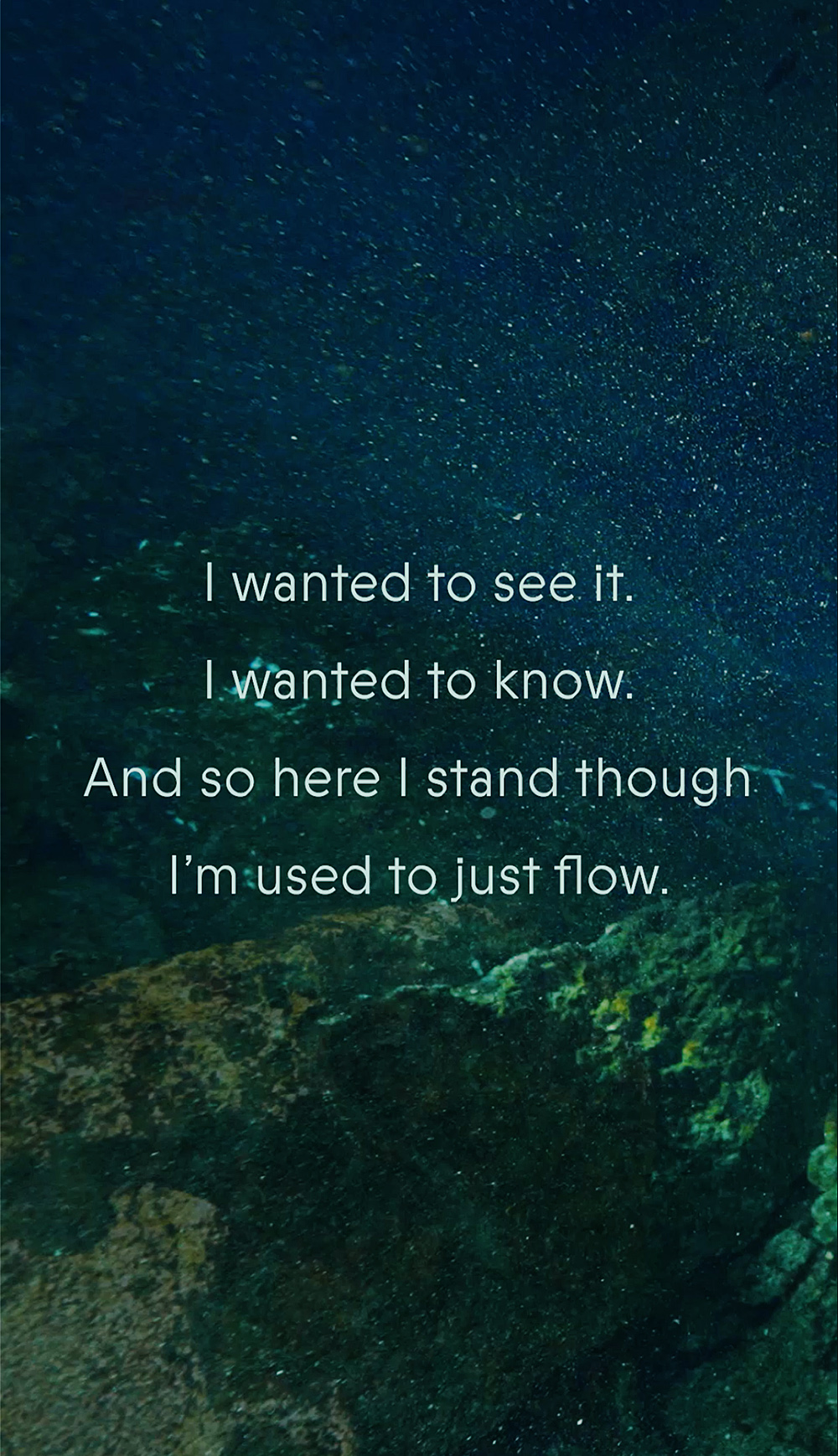
At the very end of the room is Lisa Biedlingmaier’s video work MANA (2022). The title refers to the Hawaiian name of life force and is an energy healing code. We enter a mystical sea underworld, full of light and movement, and replete with macramé things. Often considered to be a treacherous place, this sea floor is peaceful and poetic. Filmed in a cenote (a natural deep-water well) in Yucatan in Mexico, these sites were once considered to be portals to the Mayan underworld. Biedlingmaier plays with our perception. The viewer might perceive the inanimate objects as living creatures. (A phenomena called Pareidolia.) This special turn of mind transforms sailing rope macramé into seahorses. Or one might consider the formations to be ancient artefacts. Their graceful gravitational dance and shapes trigger connections to the archaic, perhaps to a collective shared memory. Psychologically and mythically, water is the most common symbol for the unconscious mind. It is the realm of feelings, dreams and creation. The artist invites the viewer to delve within. It is a consideration on love, one beyond a tunnel-vision perspective and one that celebrates intricacy, tolerance and sentience.
At the very end of the room is Lisa Biedlingmaier’s video work MANA (2022). The title refers to the Hawaiian name of life force and is an energy healing code. We enter a mystical sea underworld, full of light and movement, and replete with macramé things. Often considered to be a treacherous place, this sea floor is peaceful and poetic. Filmed in a cenote (a natural deep-water well) in Yucatan in Mexico, these sites were once considered to be portals to the Mayan underworld. Biedlingmaier plays with our perception. The viewer might perceive the inanimate objects as living creatures. (A phenomena called Pareidolia.) This special turn of mind transforms sailing rope macramé into seahorses. Or one might consider the formations to be ancient artefacts. Their graceful gravitational dance and shapes trigger connections to the archaic, perhaps to a collective shared memory. Psychologically and mythically, water is the most common symbol for the unconscious mind. It is the realm of feelings, dreams and creation. The artist invites the viewer to delve within. It is a consideration on love, one beyond a tunnel-vision perspective and one that celebrates intricacy, tolerance and sentience.